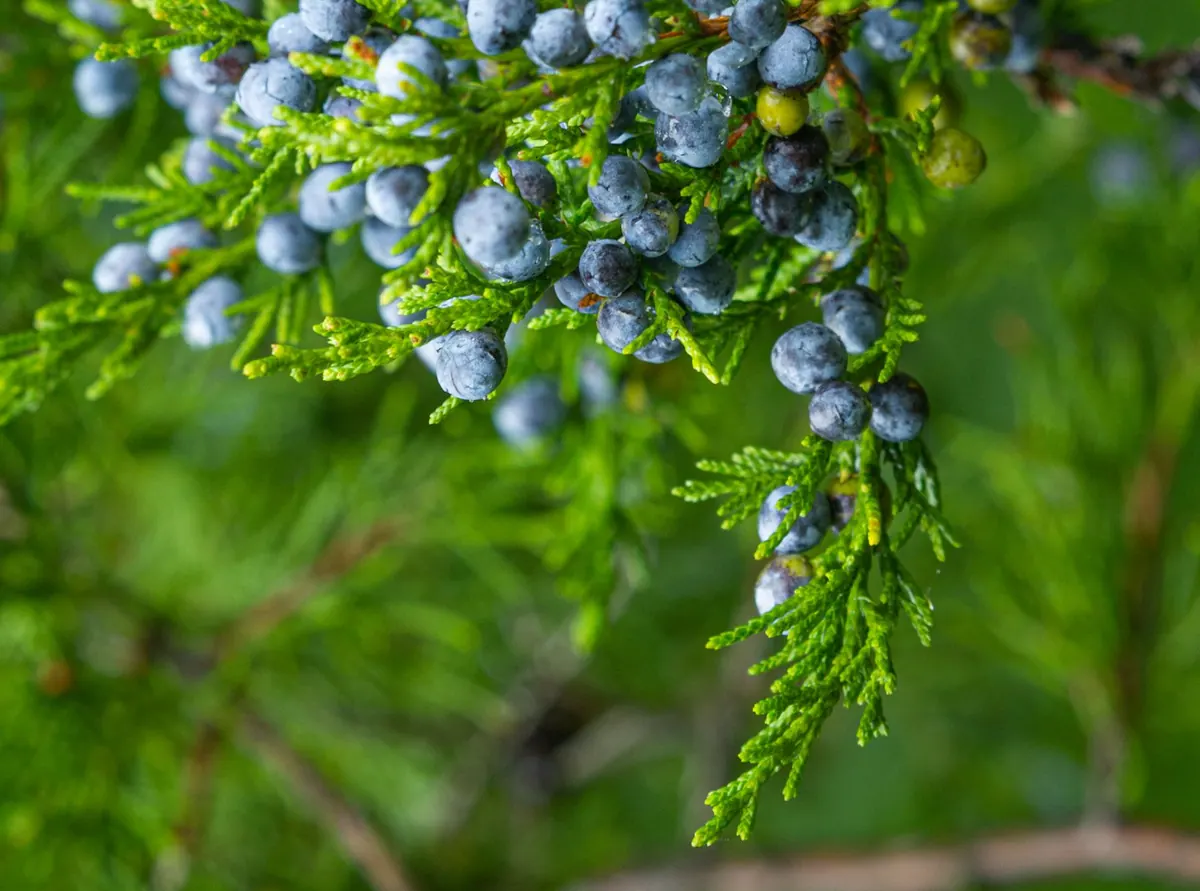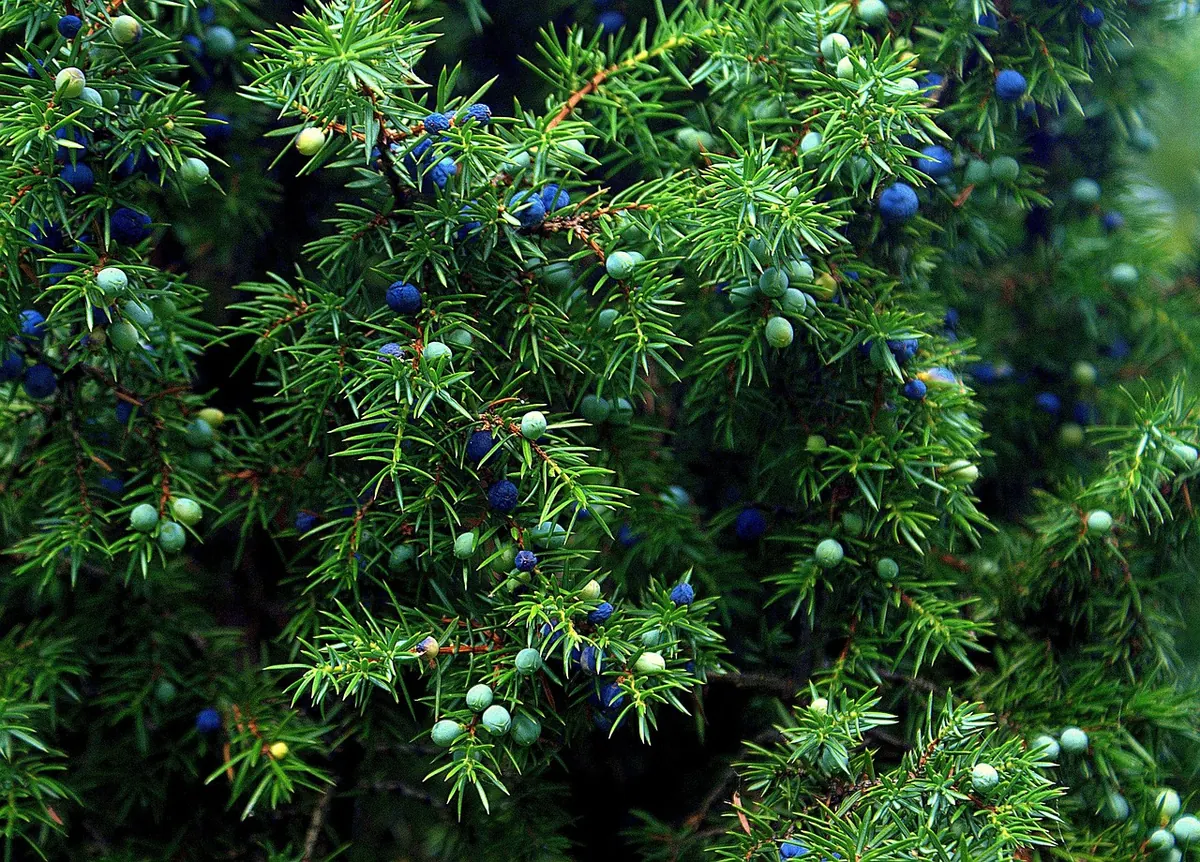
Junipers are among the toughest evergreens you can grow in a British garden. A mature Juniperus communis on an exposed hillside will sail through a fortnight of hard frost without complaint. The trouble is that most garden junipers are not on a hillside. They are in pots, in a border planted last spring, against a fence, or in a front garden that funnels every bit of north-east wind straight at them. Those are the plants that emerge from winter with brown patches, splayed branches and a rootball that has been sitting in cold water since November.
Cold on its own is rarely the problem. Most garden junipers are rated fully hardy in the UK and will shrug off temperatures well below anything an average winter produces. It is the combination of cold with something else that does the harm.
The plants most at risk are newly planted ones, anything still in a pot, columnar cultivars with a dense upright habit, and any juniper unlucky enough to be sitting in a heavy clay corner or beneath a dripping gutter.
Work through this before the first hard frost — late October into November is about right in most of the UK.
Wrapping a hardy juniper in fleece is mostly reassurance for the gardener. What matters is the root zone. A frozen rootball cannot take up water, so on a bright, breezy day the foliage keeps transpiring and there is nothing to replace the moisture. That is why the browning so often appears on the south or south-west side of a plant — the side facing the winter sun.
For containers, insulate the pot rather than the plant. Bubble wrap, hessian or a couple of layers of old sacking wrapped around the outside and tied in place will keep the compost from freezing solid. Never wrap plastic over the foliage itself; a sealed, damp crown is an invitation to mould and dieback. Group pots together in a sheltered corner, close to a house wall if you can, and they will shelter one another.
In the ground, mulch plus a windbreak is usually enough. If a plant is small, tender-bred or newly bought from a warm nursery, a loose collar of fleece or bracken around the base, removed on mild days, will help it through its first winter.
Wind does more structural damage in an average UK winter than frost does. It strips moisture from the foliage and it rocks young plants loose in the ground. After every gale, check newly planted junipers and firm them back in if the stem moves. A short stake at an angle, with a proper tree tie, is worth having for a tall, top-heavy specimen in its first winter — but take it out within a year or two so the plant builds its own strength.
For snow, tie the branches of upright cultivars such as 'Skyrocket' or Juniperus chinensis 'Stricta' in a loose spiral with soft twine in late autumn, then release them in March. Once snow settles on the plant, knock it off gently with a soft broom, brushing upwards and outwards. Do it before it freezes solid. If the branches are already encased in ice, leave them alone and let it thaw naturally — prising ice off snaps more wood than the ice ever would.
If a branch does break, cut it back cleanly to a side shoot rather than leaving a ragged stub. And keep rock salt away from the border: shovelled, salt-laden snow heaped onto a juniper will scorch the foliage and damage the soil. Grit or sand is the safer choice on paths.
If you only act on one thing this winter, act on drainage. Junipers hate standing water. Prolonged saturation damages the fine roots, and the plant then struggles to take up water even when the soil is wet — which is why a drowning juniper can look exactly like a drought-stressed one.
In heavy clay, plant on a slight mound, mixing grit or coarse bark into the planting hole and the surrounding soil. Direct downpipes and gutter overflow away from borders. Keep fallen leaves off the crown of low, spreading junipers, where they trap damp against the stems. And resist the urge to pile wet compost around the base in autumn; a dry mulch in spring is far more useful than a soggy one in December.
You do not need to fuss. A quick walk round after each storm and hard frost will catch nearly everything.
Finally, a simple test if a juniper looks awful in February: scrape a little bark near the base with a fingernail. If it is green underneath, the plant is alive and will almost certainly recover — give it time and a dry spring. If it scrapes back brown and lifeless close to the ground, the roots have gone, and no amount of fleece or mulch now will bring it back.
Photo: uroburos / Pixabay