Juniper rarely tops a plant wish list. It is slow, prickly and undramatic for its first few years, and it sulks in heavy, wet ground. Give it the right spot, though, and it becomes one of the most generous plants in a wildlife garden: dense evergreen cover that small birds use all winter, and a crop of berries that ripens over two or three years and feeds thrushes when almost everything else has gone.
Common juniper (Juniperus communis) is one of Britain's few native conifers and, in the wild, one of its most diminished — ageing plants on chalk downs and Scottish hillsides, with little young growth coming through behind them. That makes a garden plant more valuable than it looks. It is evergreen, so it never leaves a gap in cover. It is long-lived, so a specimen planted now will still be doing the job in forty years. And it is tough once established, tolerating wind, salt and thin, stony soils that plenty of shrubs refuse.
What it is not is quick. Expect a squat, spreading bush for the first few seasons; some forms barely reach a metre after a decade. Plant it for the long view.
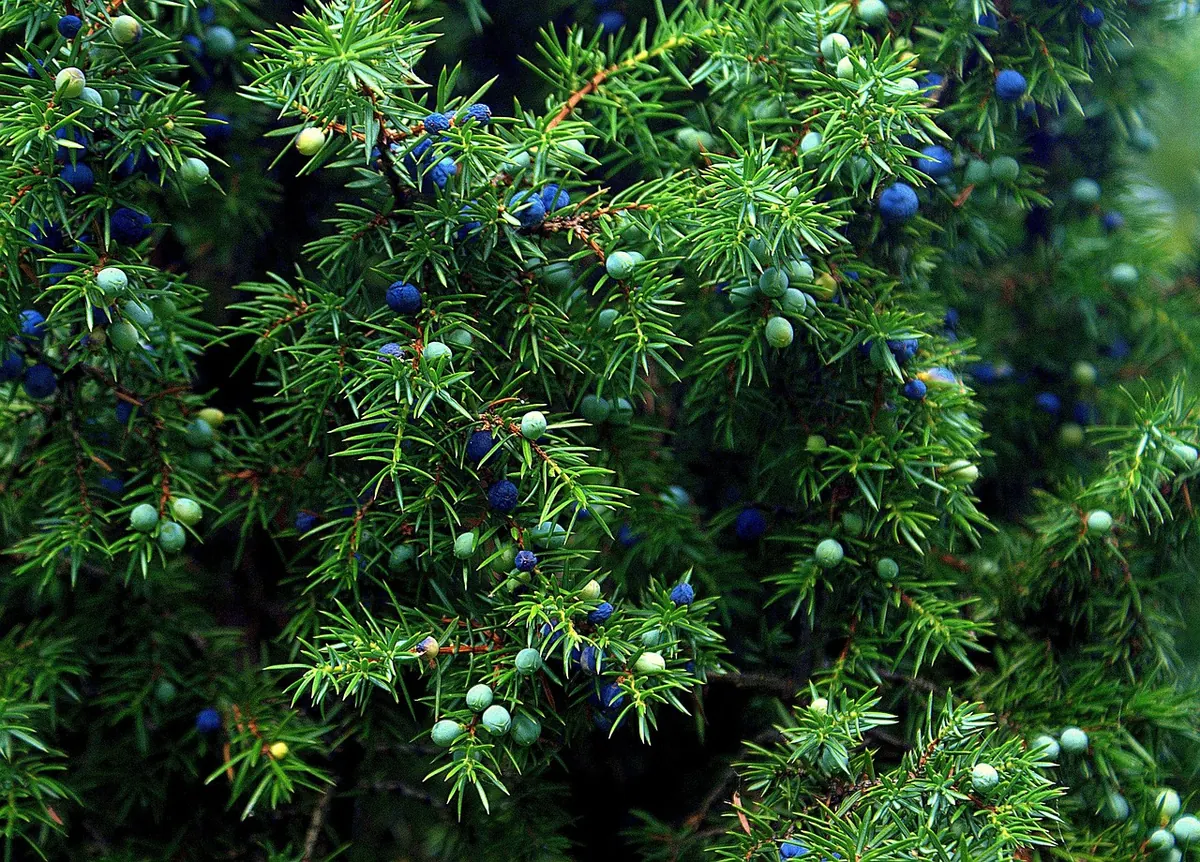
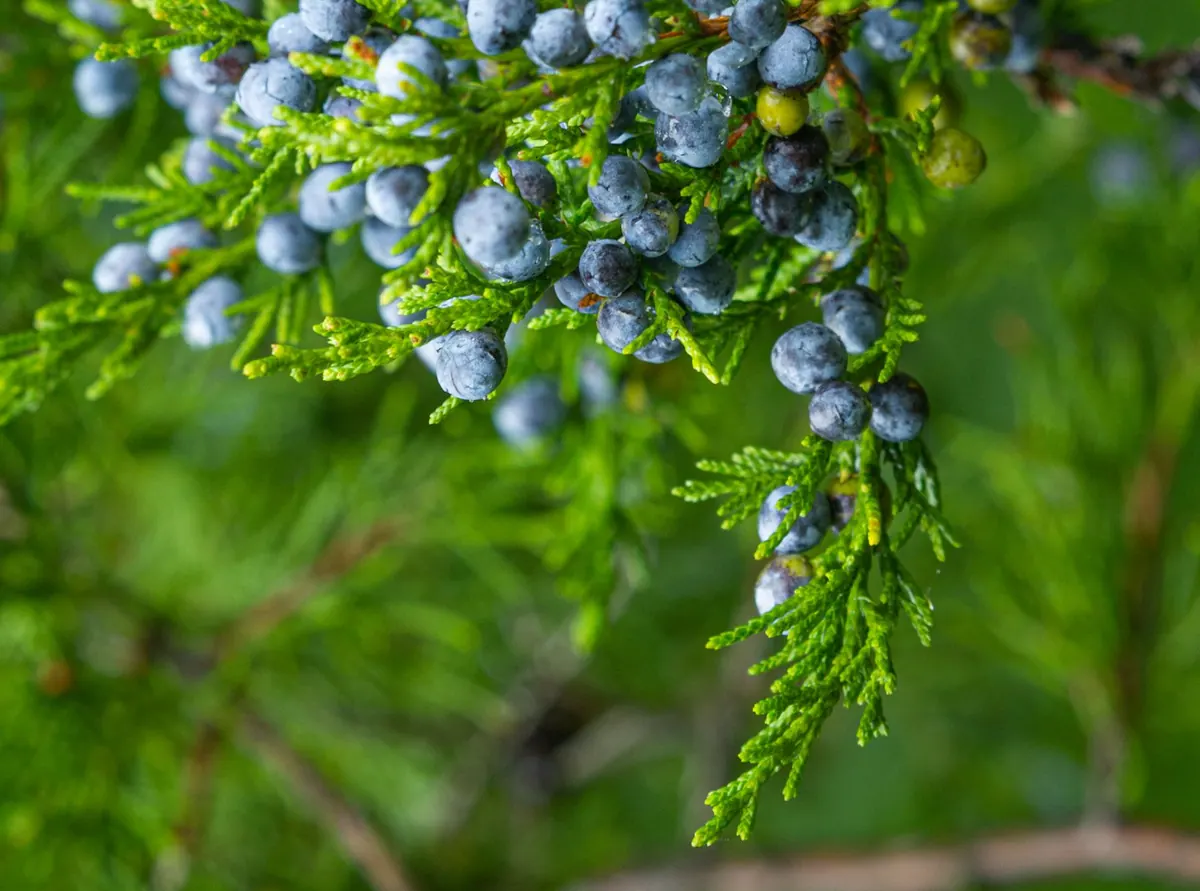
Those blue-black berries are not berries at all but fleshy seed cones, and they take two or three years to ripen. On a mature female plant you will often see both at once: hard green cones on this year's growth, and soft, dark, powdery ones ready to be taken. Only female plants carry them, and only if a male is within reach — juniper is usually dioecious, meaning the sexes sit on separate plants.
The fruit is resinous and strongly flavoured, which is why birds leave it until they need it. Blackbirds, song thrushes and mistle thrushes work through a bush during a hard spell, and winter visitors such as redwings and fieldfares will strip it once the rowans and hawthorns have been picked over. A juniper that crops most years is a quiet insurance policy for the birds that stay put.
Leave the berries to them. If you want to use a few in the kitchen, check proper foraging guidance first: they are potent, they do not suit everyone, and anyone pregnant or taking regular medication should speak to a pharmacist before cooking with them.
It is the structure that makes juniper so useful. The needles are sharp and closely packed, and a mature bush is close to impenetrable — exactly what a small bird wants when it is sitting on eggs or trying to sleep through a storm. Dunnocks, robins, wrens and blackbirds all nest happily in that sort of tangle, and goldcrests will work through the inner branches after insects when the weather is raw.
Because it is evergreen, juniper gives cover in February and March, before most hedges have leafed up. That early shelter matters: somewhere to roost out of the wind, and a safe staging post while the breeding season gathers pace. A single plant in a border corner will be used far more than you would guess — especially if it keeps a low, bushy skirt rather than being trimmed into a lollipop.
Here is the honest bit. Juniper is wind-pollinated. Its male cones release clouds of pollen in spring and there is no nectar involved at all, so you will not find bees working the flowers. As a nectar plant it offers nothing.
What it offers instead is habitat. The dry, sheltered ground beneath a mature juniper, and the deep litter of old needles, is the sort of quiet corner where overwintering insects settle — including queen bumblebees looking for somewhere to sleep out the winter. Juniper also has its own specialists: the juniper carpet and juniper pug moths both feed on it, along with a small group of other invertebrates that have evolved alongside it. Those caterpillars are bird food in their own right.
So treat juniper as the woody skeleton of a wildlife corner, not the buffet. Plant nectar-rich flowers around it and the whole thing starts to work.
Junipers rot in wet ground, and that single fact explains most failures. On heavy clay, either improve drainage hard or grow juniper in a raised bed or a large pot. Otherwise: full sun, free-draining soil, neutral to alkaline. Chalk and thin, stony ground suit it, and coastal or exposed sites are fine once it has settled.
Forms worth looking at include 'Hibernica', a narrow upright column that works well as a punctuation mark; 'Compressa', which stays small and slow and is ideal for pots; and 'Repanda', a low spreading carpet for a sunny bank. Named cultivars are usually one sex, so if berries matter to you, check the label or ask before buying.
Planting, step by step:
On pruning, one rule matters more than any other: juniper does not regrow from old, bare wood. Cut back into brown branches and you will be left with a permanent hole. Trim lightly in spring, just tipping back new growth, and take out a whole crowded branch if the middle is packed.
A plant that yellows and collapses after a wet winter is usually suffering root rot rather than hunger. Aphids and juniper scale can leave sooty mould on the foliage; both are worth tolerating for a season, since tits will work through them.