Winter is the honest test of a garden. When the herbaceous border has collapsed and the lawn is more mud than grass, what remains is structure: clipped shapes, dark green mass, and the scent of something still growing. Juniper, box, yew and lavender are four of the most useful evergreens for that job, but they ask for different things and give back different things. Pick the wrong one and you will spend years fighting it. Pick well and it will quietly hold the garden together for decades.
Box (Buxus sempervirens) is the classic small-scale plant. Tiny leaves, dense habit, and it clips into tight balls, low hedging, parterres and knot gardens better than anything else we grow. It is slow — roughly 10–15 cm of growth a year in decent conditions — which is either a virtue or an irritation depending on your patience. Slow also means forgiving: a box hedge clipped slightly wrong will grow out of it.
Yew (Taxus baccata) does the same job at a larger scale and in shade. It makes the finest tall formal hedge in a British climate, clipping more crisply than privet or laurel and living for centuries. It grows faster than most people expect once established, at perhaps 20–30 cm a year, and — crucially — it regrows from old wood. That is rare among conifers, and it means a neglected yew hedge can be cut back hard and brought back into line.
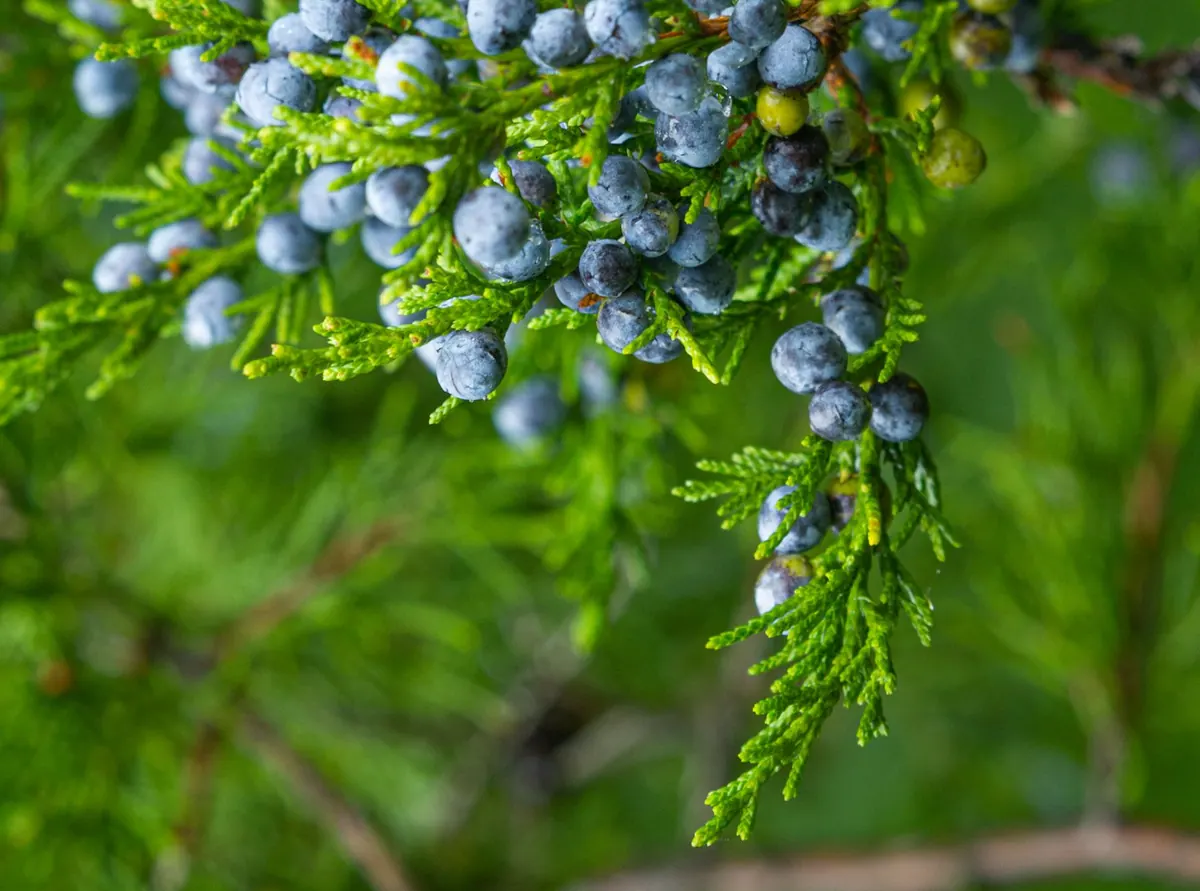
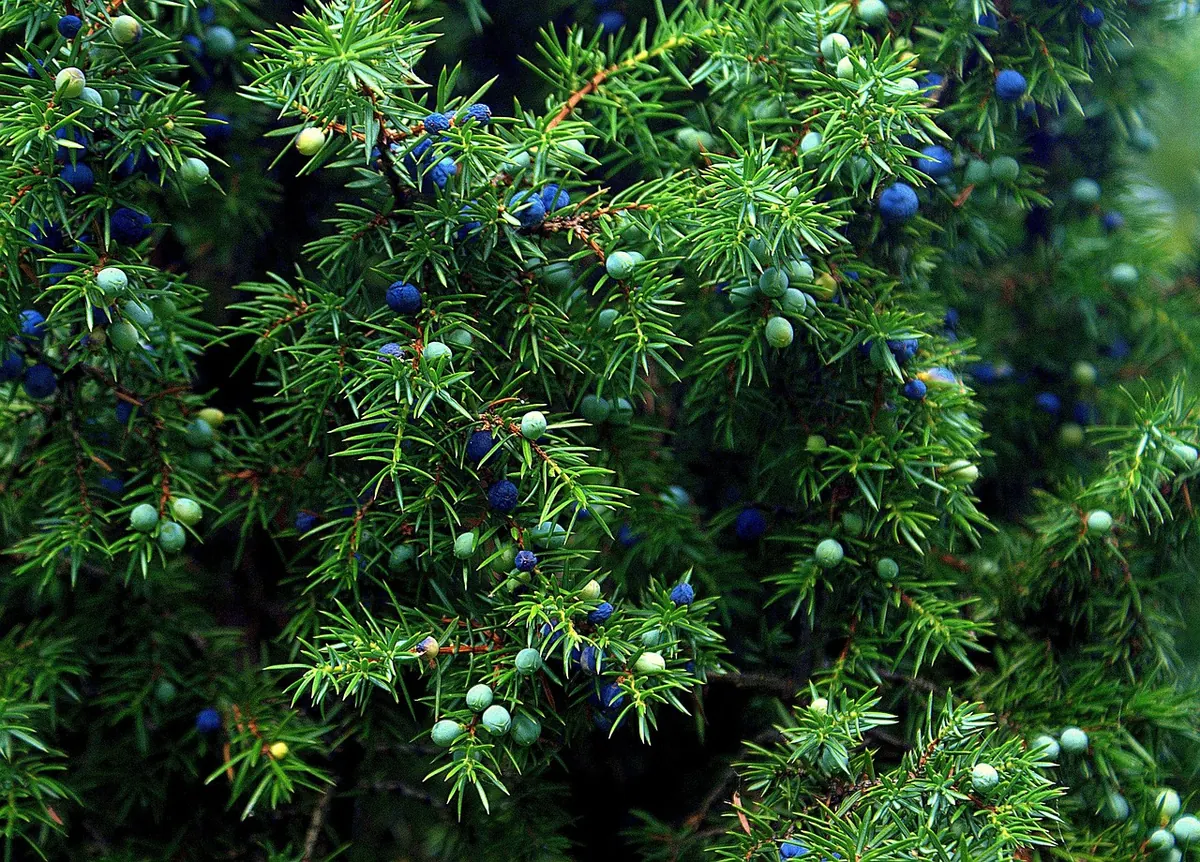
Juniper is a genus rather than a single plant, and the range is enormous: prostrate carpeting forms such as Juniperus communis 'Repanda', slow blue-grey cushions like J. squamata 'Blue Star', the narrow Irish column J. communis 'Hibernica', and the native common juniper whose berries flavour gin. Nearly all want sun and sharp drainage, and none will forgive being cut back into bare, leafless wood.
Lavender (Lavandula angustifolia 'Hidcote' and 'Munstead', or the larger L. x intermedia 'Grosso') is the odd one out. It is a Mediterranean sub-shrub, not a hedging plant. It can be clipped into a low informal hedge, but it will never stay crisp and formal for long, and after a decade or so it will go woody and need replacing.
Think in terms of the space you have and the speed you need. A box hedge put in as 20 cm plants will take four or five years to read as a hedge; yew of the same size will get there sooner but needs more room. Junipers vary wildly — some spread two metres wide, some stay under 60 cm. Lavender fills out fast, looks wonderful in years two to six, then starts to open up in the middle.
This is where the four really part company. Box and yew need regular clipping to look their best; juniper and lavender need almost none, but resent the wrong kind of cut.
Rule of thumb: box and yew forgive the shears. Juniper and lavender do not.
Yew is the tolerant one: it copes with most soils, including heavy clay, and takes dry shade under mature trees, provided the ground is not waterlogged. Box is nearly as adaptable and is happy in sun or part shade, though a very wet site will encourage disease. Junipers and lavender are the specialists — both want sun and free-draining ground, and both sulk or die in winter wet. Lavender prefers a lean, slightly alkaline soil; if yours is rich and damp, grow it in a raised bed or a pot of gritty compost, or choose something else. Adding horticultural grit and planting on a slight mound helps both no end.
Yew for tall boundaries, hedges between gardens, and the dark backdrop that makes pale planting sing. Box for low hedging, topiary, edging a parterre, and containers either side of a door. Juniper for gravel gardens, slopes, rockeries, coastal plots and dry banks where little else thrives — and for the texture and blue-grey colour it brings to a mixed border. Lavender for path edges, sunny borders, herb gardens, pots, and anywhere you want scent on a warm evening and bees in July.
Box has two serious troubles in Britain now: box blight, a fungal disease that causes bare patches and dieback in wet, humid conditions, and the box tree moth, whose caterpillars strip foliage and leave webbing, with two or three generations in a warm year. Neither should stop you planting box, but it is worth choosing alternatives for large schemes — yew, Japanese holly or lavender for low edging. Junipers can suffer root rot on wet ground and act as a host for pear rust, which shows as bright orange galls in spring; pick them off and avoid planting next to a pear tree. Lavender goes leggy and dies back in cold, wet winters, so improve drainage before you plant.
One safety note: yew and box are both toxic if eaten, and yew is particularly dangerous for livestock, horses and pets. Keep clippings out of reach, and if you are unsure about your own animals, ask your vet.
Most gardens end up using two or three of these rather than choosing between them. Yew at the boundaries, box or lavender at the front edge, juniper on the dry bank by the drive — that is a planting that looks good in February and needs very little from you. Buy plants a size you can manage, plant them at the right spacing, water them properly through the first two summers, and the structure will do the rest.
Photo: manfredrichter / Pixabay