Junipers earn their keep in British gardens. They shrug off wind, cope with thin stony ground and dry summers, and hold their shape without constant clipping. The catch is that the name covers an enormous range of plants, from five-metre columns to flat silver carpets that spill over paving. Choose the wrong one for the spot and it will look ragged within a few seasons. What follows is a dozen reliable cultivars, sorted by habit, with the growing conditions each one actually wants.
Almost every juniper in the trade comes from mountain or woodland edge country, and that tells you what it needs: sun for most of the day and soil that drains. They will put up with poor, gritty, slightly limey ground far better than they will tolerate heavy clay that sits wet through winter. If your soil holds water, plant on a low mound of soil mixed with horticultural grit and garden compost, and let the roots run sideways into the surrounding ground rather than sitting in a sump.
Light matters for colour as much as health. Golden and blue forms stay vivid in full sun; in shade they fade to a dull green and thin out underneath. Column junipers also benefit from a little shelter from the drying east wind, and from having wet snow knocked off them in winter, which is what causes those splayed, open centres you see on exposed sites.
Check the eventual spread before you dig. Most disappointments come from planting a two-metre spreader half a metre from a path.
These are the structural ones, useful either side of a gate, as a narrow screen or as a dark vertical against a pale wall.
Juniperus communis 'Hibernica' — the Irish juniper, a tight blue-green column reaching roughly 2.5m with age. It is the most "British" looking of the group and does well in poor, chalky soil. Give it a spot out of the strongest wind, as it can open up in bad weather.
Juniperus scopulorum 'Skyrocket' — very narrow, silver-blue, and slow enough to sit in a small border for years. Expect about 3m tall by 60cm wide in time. It looks best planted in threes, slightly staggered, rather than as a lone spike.
Juniperus scopulorum 'Blue Arrow' — similar in use to 'Skyrocket' but a touch bluer and denser, with a slightly stiffer outline. Good in a large container for a few years before it needs a permanent home.
Juniperus chinensis 'Spartan' — a rich green cone that eventually makes 4–5m, so treat it as a small tree or a screen rather than a border filler. It clips well: trim lightly in early summer to keep the sides dense, and never cut back into the bare brown stems inside the canopy.
Spreading forms are the workhorses: they smother weeds, hold a slope and look good with grasses and heathers.
Juniperus × pfitzeriana 'Old Gold' — golden-bronze foliage on a plant about 1m tall and 1.5–2m across. The colour is warmest in full sun and takes on a bronze tone in winter. Excellent sprawling over a low wall.
Juniperus × pfitzeriana 'Pfitzeriana' — the classic wide grey-green spreader. It is big, eventually 3m or more across, so give it room in a large garden or use it to cover a difficult bank you would rather not mow.
Juniperus horizontalis 'Blue Chip' — a low, spreading silver-blue, roughly 30cm tall and 1–1.5m wide, with fine texture and a slightly informal, layered look. Slow, tidy and happy in gravel.
Juniperus horizontalis 'Wiltonii' — often sold as Blue Rug. It lies almost flat, silver-blue for most of the year and plum-tinted in hard frost. Tolerates wind and salt, so it suits coastal gardens.
Juniperus conferta 'Schlager' — shore juniper, with soft dark green needles and a spreading habit to about 2m. One of the best for a windy, salty site or a gravel bed near the sea.
Small gardens, balconies and gravel plantings are where the dwarfs shine. All three of these need sharp drainage and will sulk in a boggy pot.
Juniperus communis 'Compressa' — a miniature grey-green column, perhaps 60–90cm after many years, with a neat, almost clipped look. It is the ideal juniper for a stone trough or a terracotta pot with plenty of grit in the compost.
Juniperus squamata 'Blue Star' — a dense bun of steely blue, around 50cm tall and twice as wide. It holds its colour well and makes a good contrast with heathers and dwarf pines.
Juniperus procumbens 'Nana' — low, soft blue-green and gently spreading to about 1.5m. Useful as a carpet between stepping stones, and a long-standing favourite for training into bonsai and trough specimens.
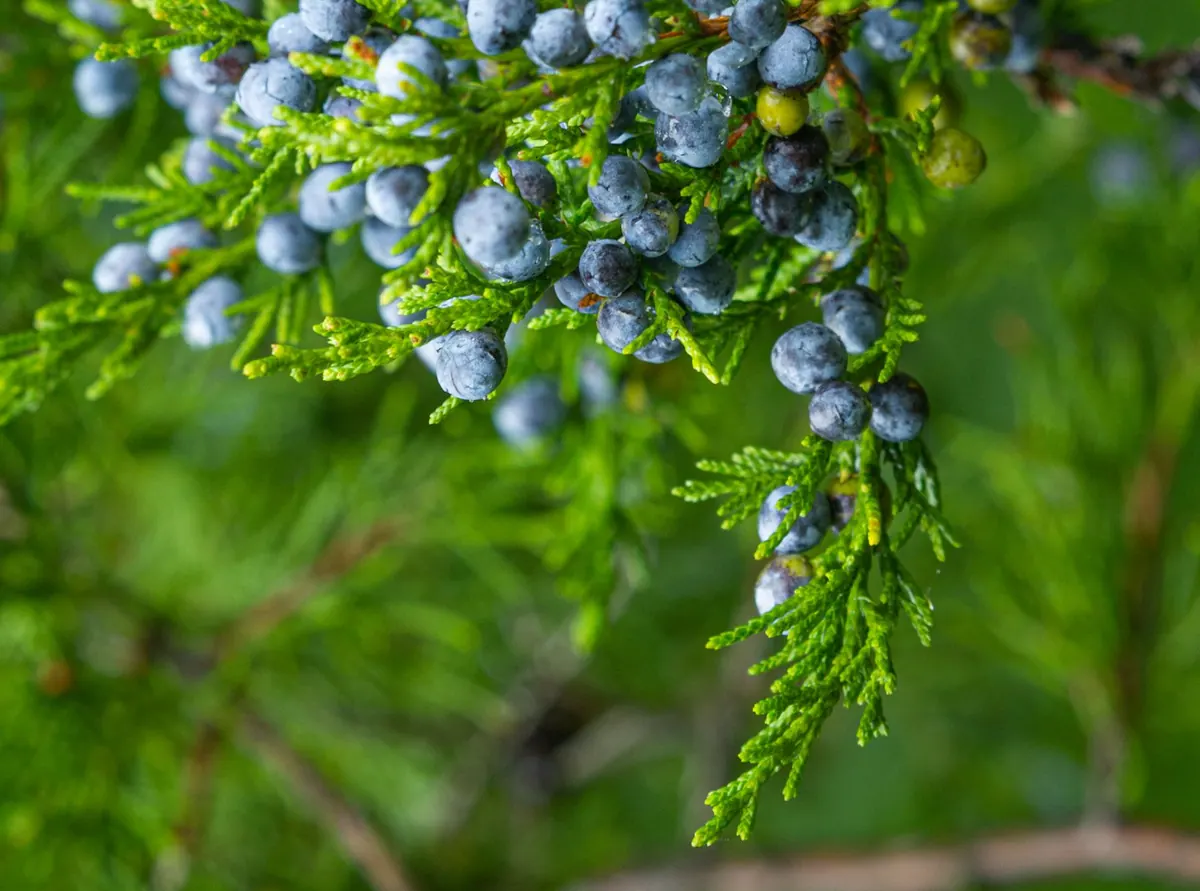
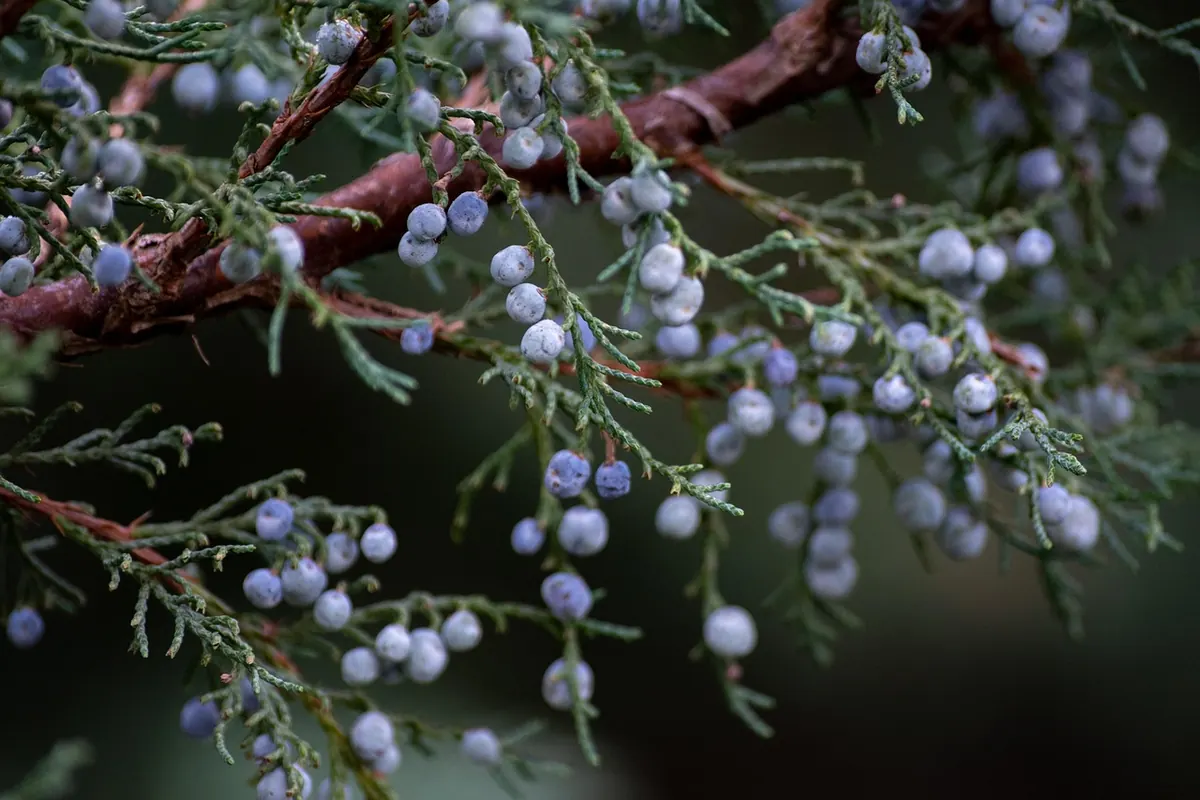
Three plants will cover most situations: a column for height, a spreader for ground cover and a dwarf for a pot or the front of a border. Match the mature size to the space you have, put them in sun, and give them drainage. If you want juniper berries for the kitchen, you need a female Juniperus communis with a male nearby for pollination — the berries take two to three years to ripen, and only the ripe ones are picked. Keep them out of reach of pets, which sometimes chew the foliage.
Beyond that, junipers ask very little. A light tidy once a year, a mulch, and a cold snap that brings out the colour in the blue and golden forms. Few conifers give so much shape and texture for so little attention, and the dwarfs will sit happily in a container on a windy balcony for years.
Photo: wal_172619 / Pixabay